

 Location:


 发布时间:
2018-10-24
发布时间:
2018-10-24 点击数:297
Some netizens asked online why the stainless steel faucets they use at home also rust. What about the "stainless" faucet? Is this faucet a fake? In fact, this is probably because they bought a fake. The stainless steel faucets on the market are generally made of 304 material to prevent rust (except for use in special environments), and some unscrupulous merchants will replace them with other stainless steel categories with poor rust resistance, such as 201, in order to achieve the purpose of counterfeiting and profit. Although there is no confusion with copper faucets, the stainless steel faucets on the market are also mixed with real and fake ones, and consumers should be more careful.
►What is the principle of rust prevention for stainless steel faucets?
Different from copper faucets, stainless steel faucets are faucet products with stainless steel as the main material. It is generally believed that stainless steel is a non-toxic material and is also one of the internationally recognized metal materials that can be implanted in the human body.
At present, most faucets on the market are made of copper, accounting for as high as 95%, while stainless steel faucets account for only about 5%. However, as the production technology of domestic manufacturers becomes more mature, coupled with the original health, environmental protection, and durability of stainless steel faucets, they have been favored by more and more consumers in recent years.
Taking the mainstream 304 stainless steel faucet as an example, its anti-rust principle is that the alloy elements form a dense oxide film, isolate oxygen contact, and prevent further oxidation. In practical applications, steel that is resistant to weak corrosive media is usually called stainless steel, and steel that is resistant to chemical media corrosion is called acid-resistant steel. Stainless steel is not necessarily resistant to chemical media corrosion, but acid-resistant steel is generally rust-proof. The corrosion resistance of stainless steel depends on the alloy elements contained in stainless steel. Chromium is the basic element that makes stainless steel corrosion-resistant. When the chromium content in steel reaches about 1.2%, chromium reacts with oxygen in the corrosive medium to form a very thin oxide film on the surface of the steel, called a passivation film, which is used to prevent further corrosion of the steel matrix. In addition to chromium, commonly used alloy elements include nickel, molybdenum, titanium, niobium, copper, nitrogen, etc., to meet the requirements of stainless steel organization and performance for various uses.
But it is not that stainless steel faucets are completely free of rust. In fact, many cases of rusted stainless steel faucets can be found on the Internet, and their owners all suspect that the faucets may be fake.
Is it a fake? You can say yes, and you can say no. If you say no, it is because the material of these products is indeed stainless steel; if you say yes, it is because the material of these faucets is not the nationally recognized food-grade 304 stainless steel, but other categories such as 201 stainless steel are used instead.
► Why must you choose 304 stainless steel faucets
There are many types of stainless steel, the more common ones are 200 series, 300 series, and 400 series. The professional classification of stainless steel is based on the crystal structure, including ferritic stainless steel (430, etc.), martensitic stainless steel (410, etc.), austenitic stainless steel (304, etc.), etc.
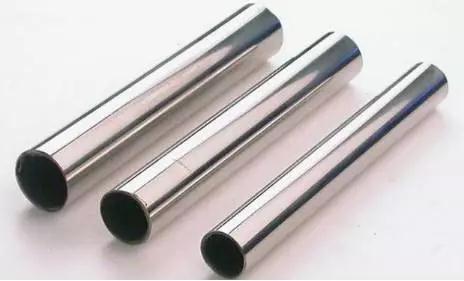
304 is a common material in stainless steel. It has the characteristics of high temperature resistance, good processing performance, high toughness, etc. It is recognized as a category that can be in direct contact with food. The common marking methods of 304 stainless steel in the market are 06Cr19Ni10, SUS304, etc. Among them, 06Cr19Ni10 generally indicates national standard production, and SUS 304 indicates Japanese standard production. 304 stainless steel faucets currently sold online are generally marked with 304 or SUS 304.
The chemical formula of 201 stainless steel is 1Cr17Mn6Ni5. The main difference between it and 304 is the nickel-chromium element. 201 is 17 chromium and 5 nickel, while 304 is 19 chromium and 10 nickel. 201 is an industrial material with certain acid and alkali resistance, but the overall performance is far less excellent than 304. 201 is mainly used to manufacture decorative pipes, industrial pipes and some shallow drawing products.
Currently, the counterfeit 304 stainless steel faucets on the market are actually made of 201 stainless steel. Since 201 stainless steel contains manganese, it will rust in humid and salty air for a long time, while 304 stainless steel does not have manganese, so it will not rust. Therefore, if your stainless steel faucet is rusted, it proves that its material is not 304 stainless steel, but it is very likely that it is a counterfeit product of 201 stainless steel by unscrupulous merchants.
Other data show that the current price of 304 is 20,000 yuan/ton, while 201 is 15,000 yuan/ton, which means that the profit of 201 products is nearly 25% higher than that of 304 products. This is why unscrupulous merchants have replaced 304 with 201.
►How to choose 304 faucet correctly?
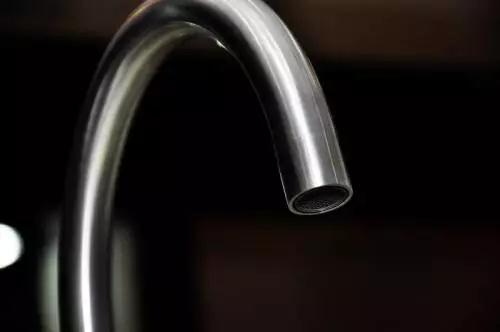
Look at the color
Since 201 stainless steel contains manganese, its surface color is slightly darker than 304 stainless steel, which does not contain manganese. However, this method has obvious defects. When buying a stainless steel faucet, if there is no reference for comparison, it is difficult to distinguish the authenticity from the naked eye.
Scratch the shell
201 stainless steel has a higher carbon content, so it is more brittle than 304 stainless steel, but its toughness is not as good as 304. When testing, you can use a knife or a sharp hard object to scratch the surface of the faucet. If it is 201, it will generally leave obvious marks on the surface, while the scratches on 304 will not be too obvious.
Test with special potion
A special stainless steel testing potion can be purchased online. Just a few drops can distinguish what kind of stainless steel it is in a few seconds. This potion is particularly convenient. The principle is to make the elements contained in the material react chemically with the substances in the identification potion to generate colored substances. This method can be implemented after purchase. If it is found that the faucet is not made of 304 material, it can be returned immediately. At the same time, this potion is also a must-have item for stainless steel product buyers and stainless steel practitioners.
Testing with a spectrometer
This method is more professional and accurate. It is not recommended for general consumers, but dealers who need to purchase in large quantities may consider trying it. In addition, if the faucet purchased is very expensive, or the element content requirements are very high, you can also find a special testing company for testing, and they generally have a spectrometer.
►In addition to not rusting, we should also pay attention to the precipitation of other heavy metals
Are stainless steel faucets, especially 304 faucets, really that magical? Not really.
In 2013, CCTV-2's program "Is It Really?" cooperated with the Beijing Hardware and Plumbing Product Quality Supervision and Inspection Center to sample 14 faucets of different brands on the market, including two stainless steel faucets, produced by PLUM and Supor. In the test of 14 samples in accordance with the US standard NSF61, 13 samples met the US standard, while Supor's sample faucet was found to contain 3.028ug/L of hexavalent chromium, which exceeded the US standard (≦2.0ug/L) by 50%.
Experts said that hexavalent chromium compounds have carcinogenic effects in the body and can cause many other health problems. Ingestion of excessive doses of chromium can cause kidney and liver damage, nausea, gastrointestinal irritation, gastric ulcers, cramps and even death. The degree of damage to the human body is no less than that caused by excessive lead. In addition to hexavalent chromium, you should also pay attention to the precipitation of other heavy metal elements in the faucet. The relevant national standards have strict regulations on the precipitation of heavy metals in faucets, which can be used as a reference.
Therefore, if you ask which is better, a full copper faucet or a stainless steel faucet, it is difficult to get an answer. For those who choose stainless steel faucets, it is recommended to buy 304 stainless steel faucets.
